GOOD LUCK! : 80 Years Since the End of the War
Taiwan's exhibition marking eighty years since the end of the war, held in a former air force headquarters. I was responsible for four pieces in it: a marble figure in a display case that does not exist, and three projections, on a floor, a wall and a map.
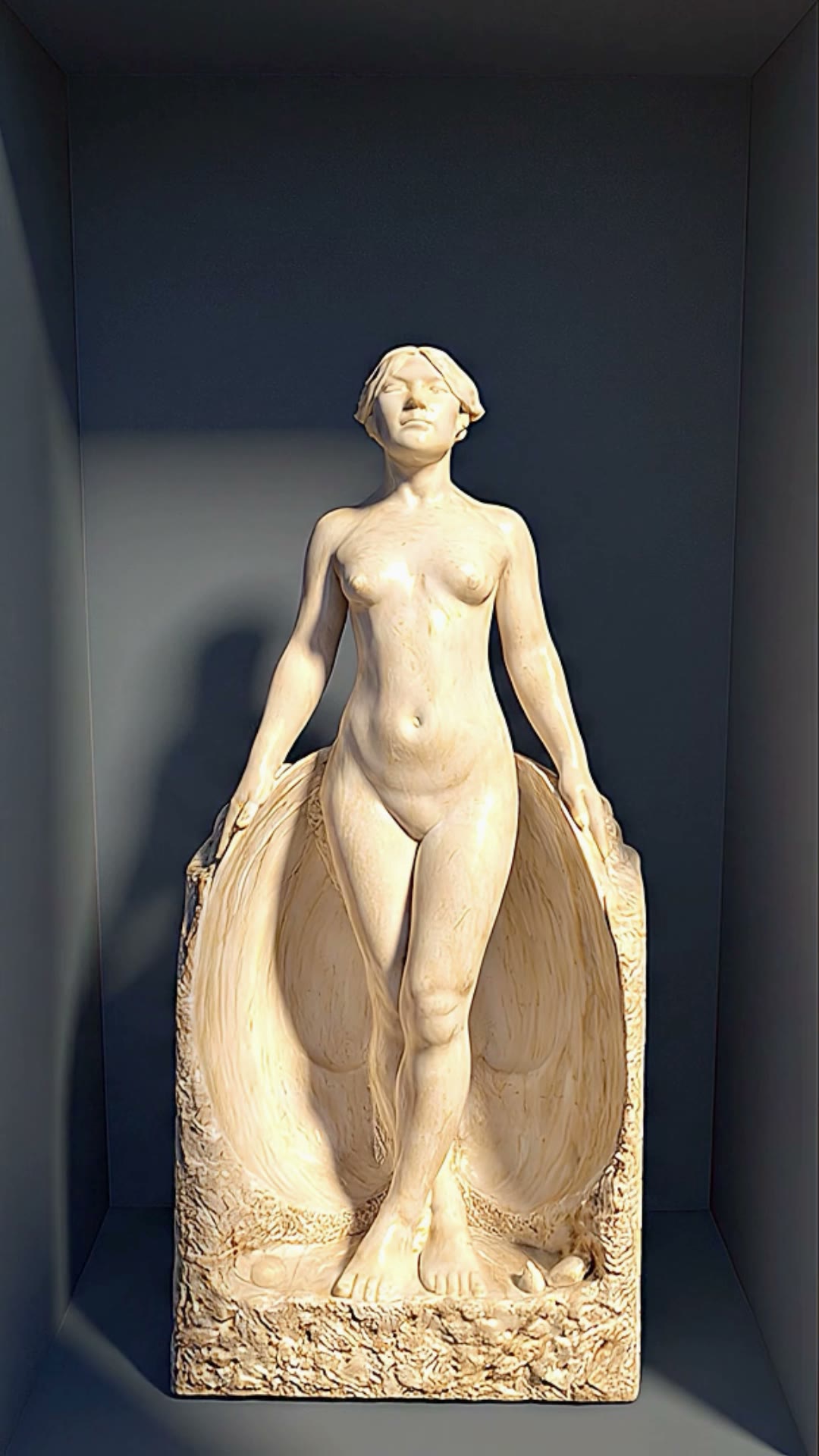
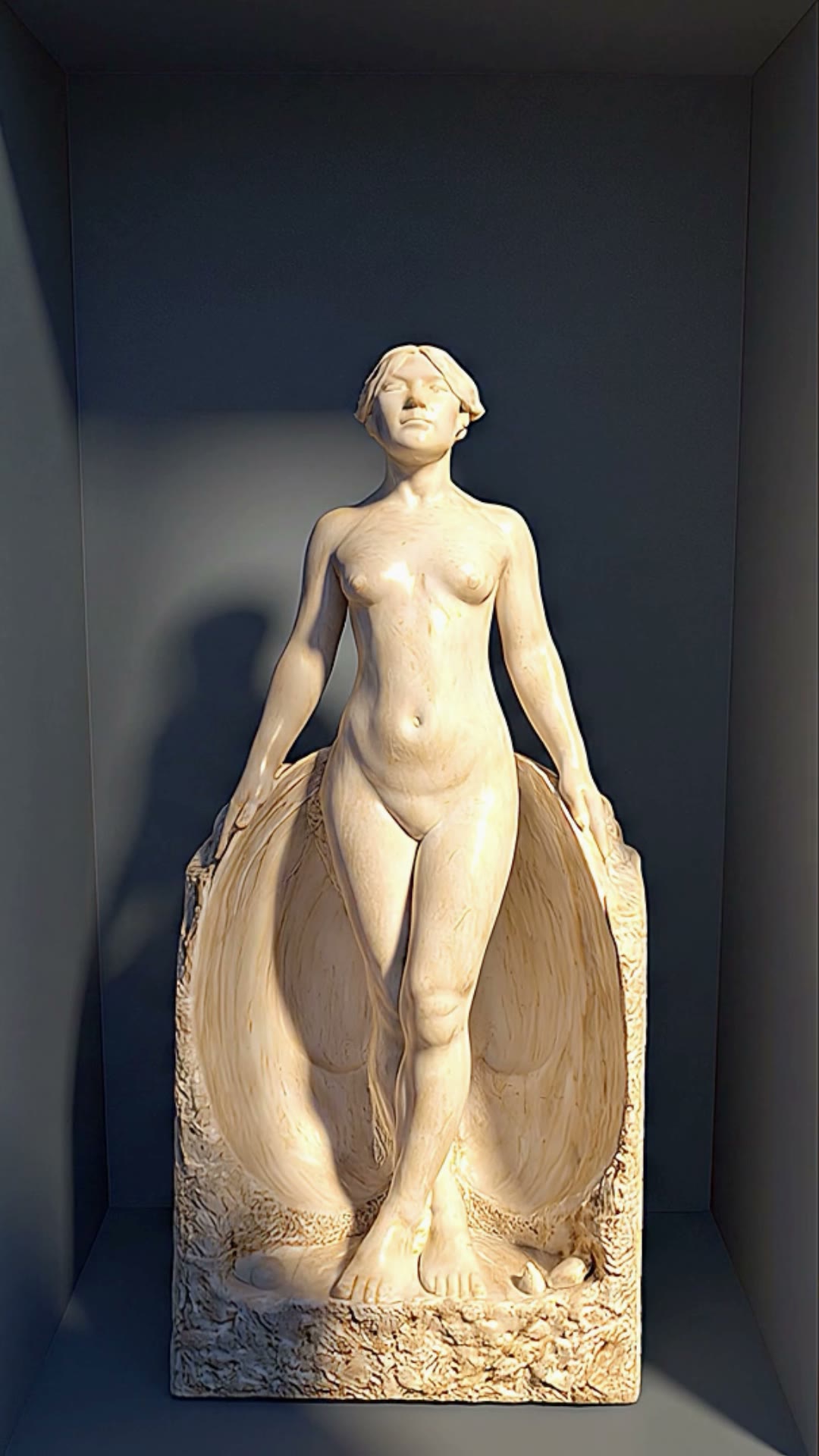
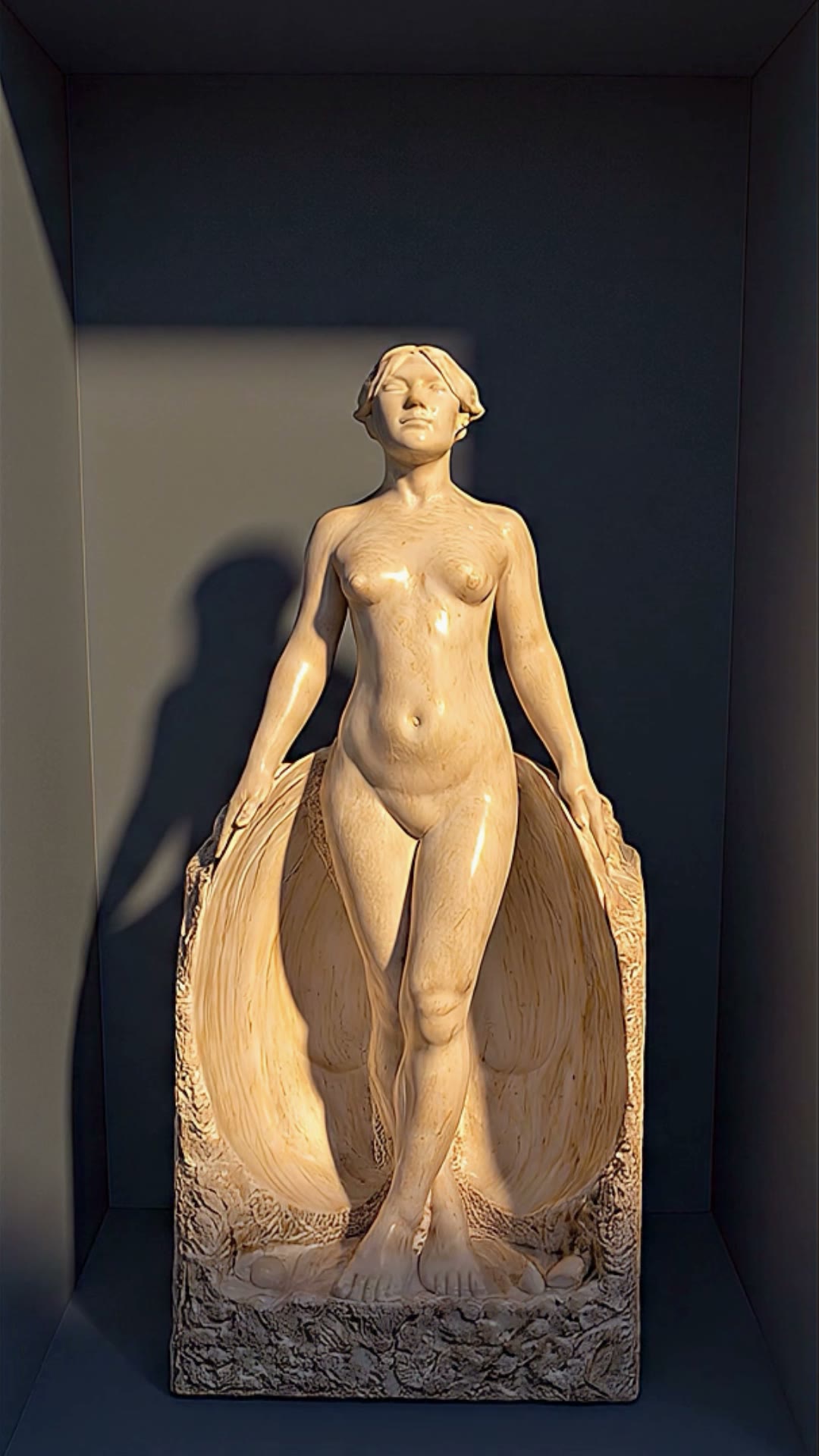
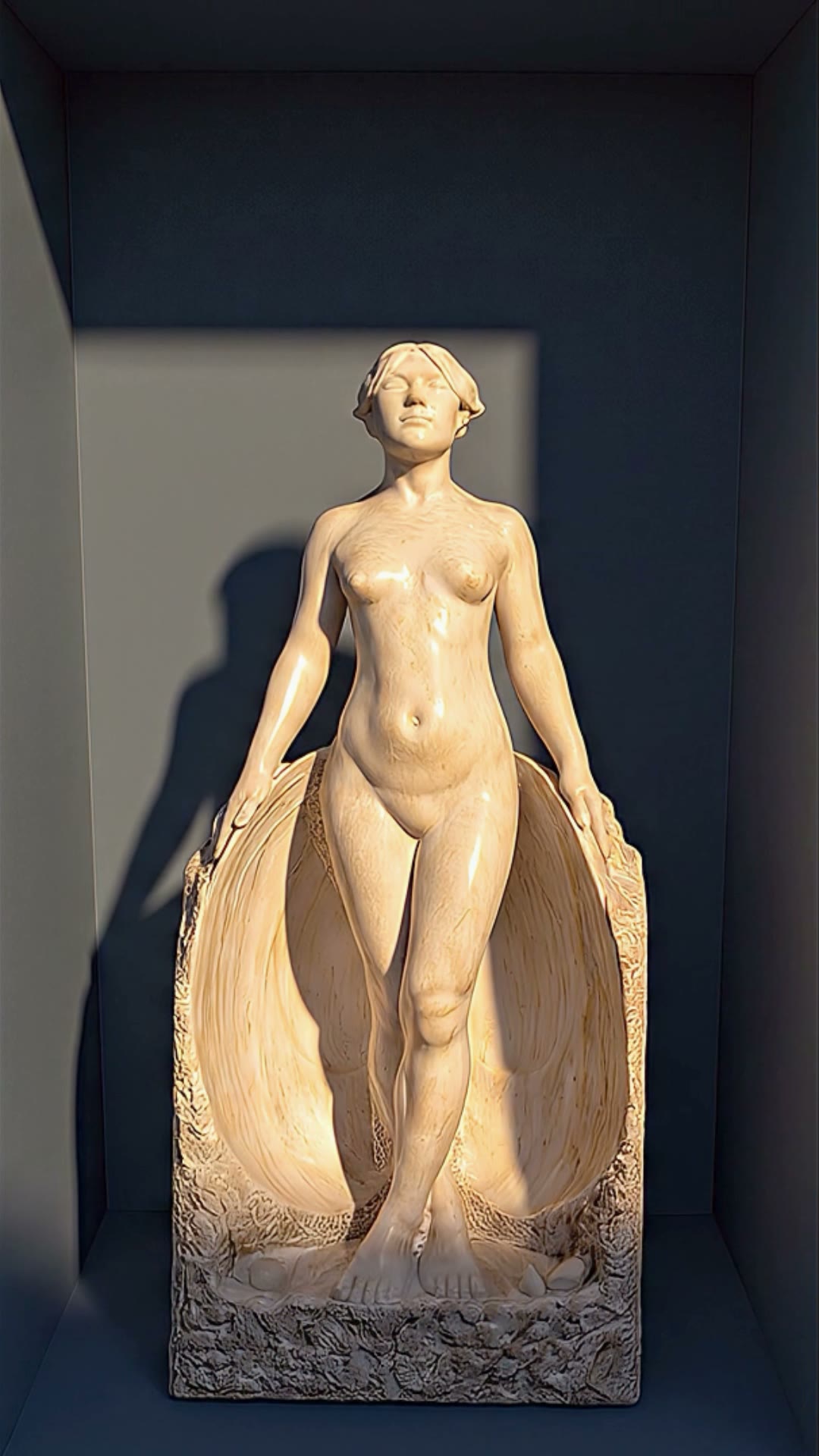
- Kanroshui 甘露水: the perspective-matched virtual display case, the lighting footage and the delivered loop
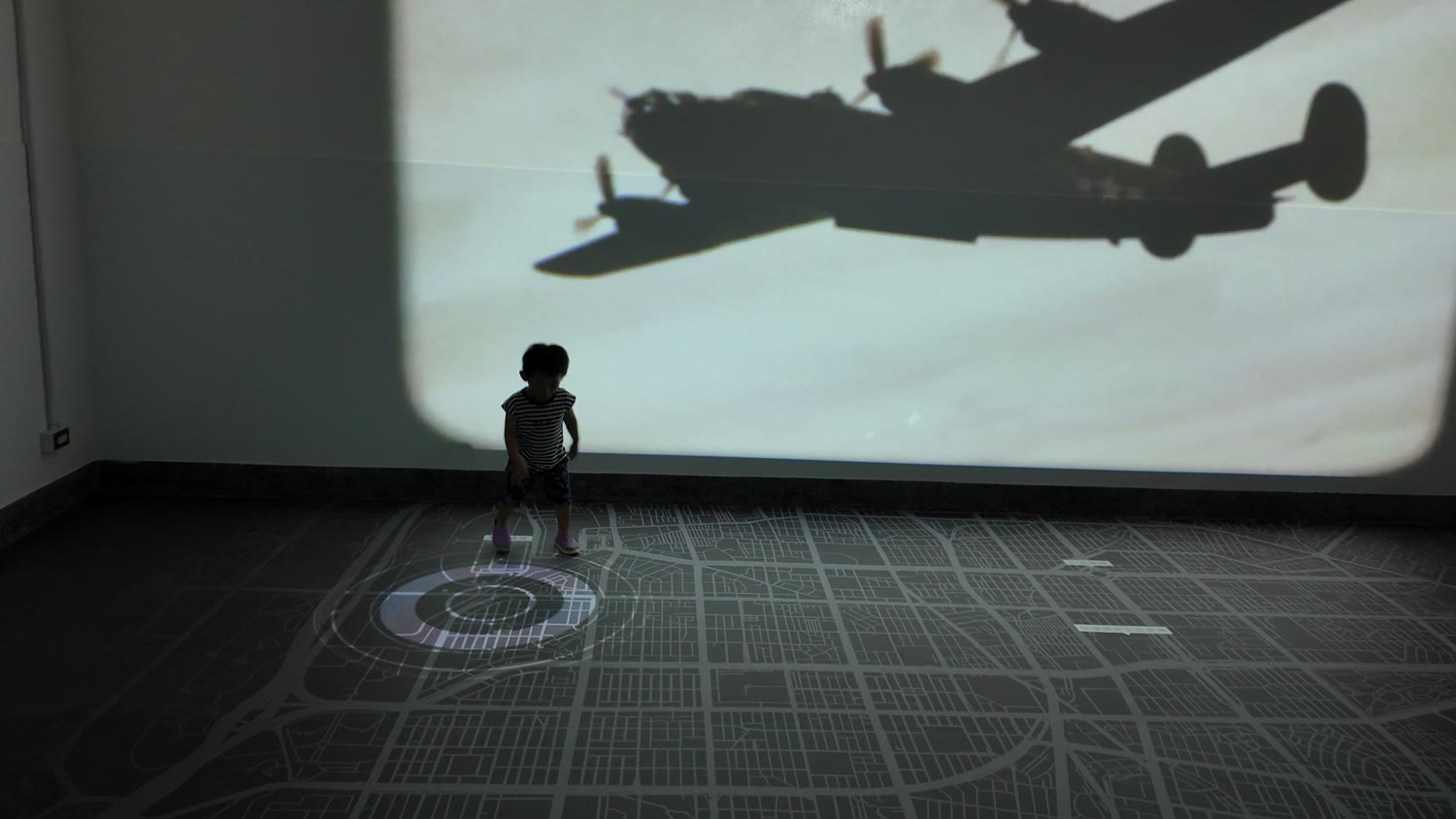
- Floor projection: the air-raid sequence on the Taipei map
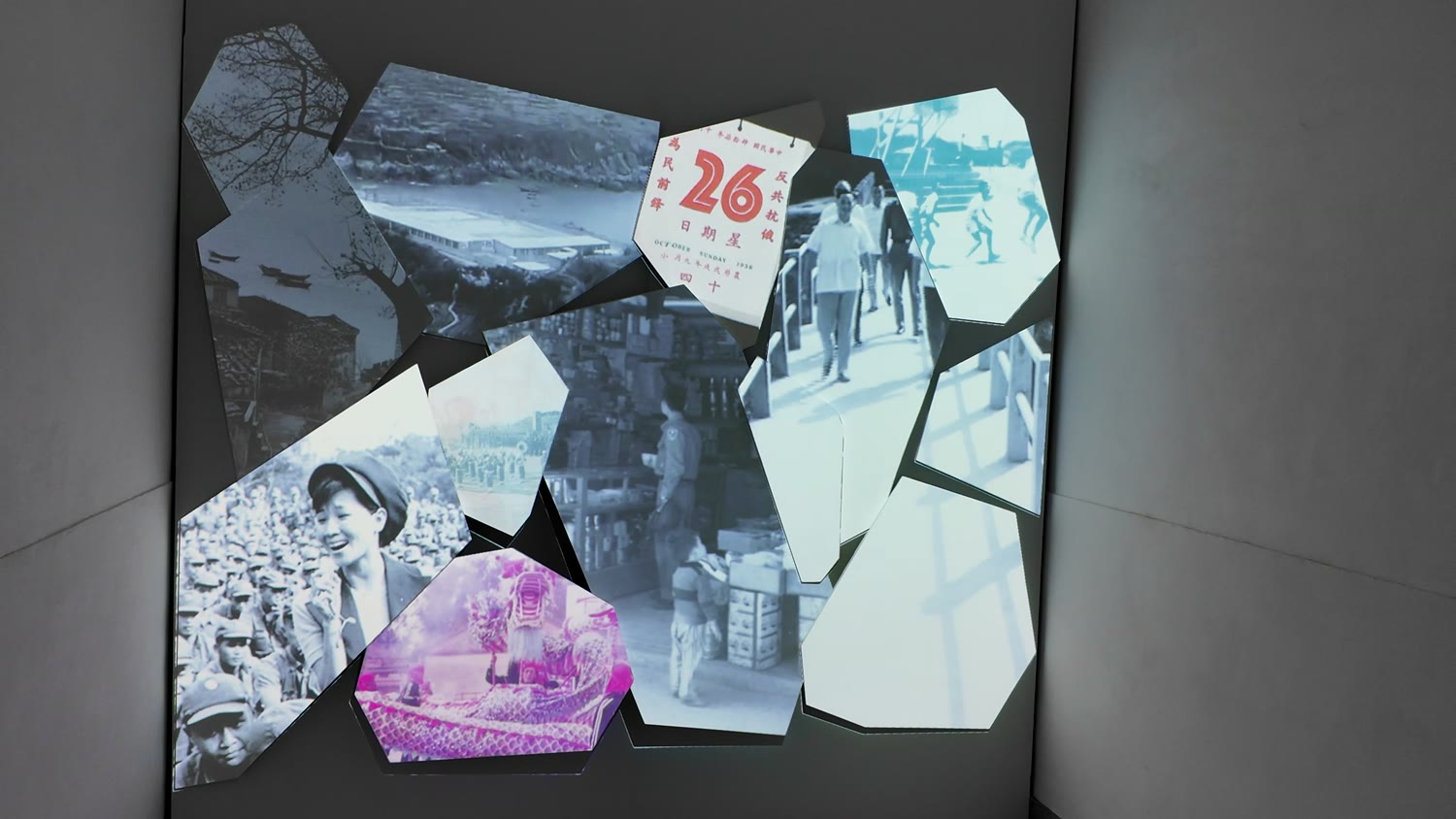
- Wall projection: 單打雙不打, on the fragmented wall
- Map projection: three periods of the site, on the tabletop model
- The sculpture, by Huang Tu-shui. The imagery is authorised by the National Taiwan Museum of Fine Arts
- Playback and the physical lighting, controlled by the developers
- Curation, exhibition and spatial design
- The visitor message-card wall
- GOOD LUCK! 骨力臺灣——終戰八十特展
- Executed by 宜東文化
- My pieces were designed at 23Design.
Kanroshui: a case that isn't there
Huang Tu-shui carved 甘露水, known in English as Sweet Dew, in marble in 1921. It later spent decades out of public sight before returning in 2021. This exhibition uses that story to echo the country's own.
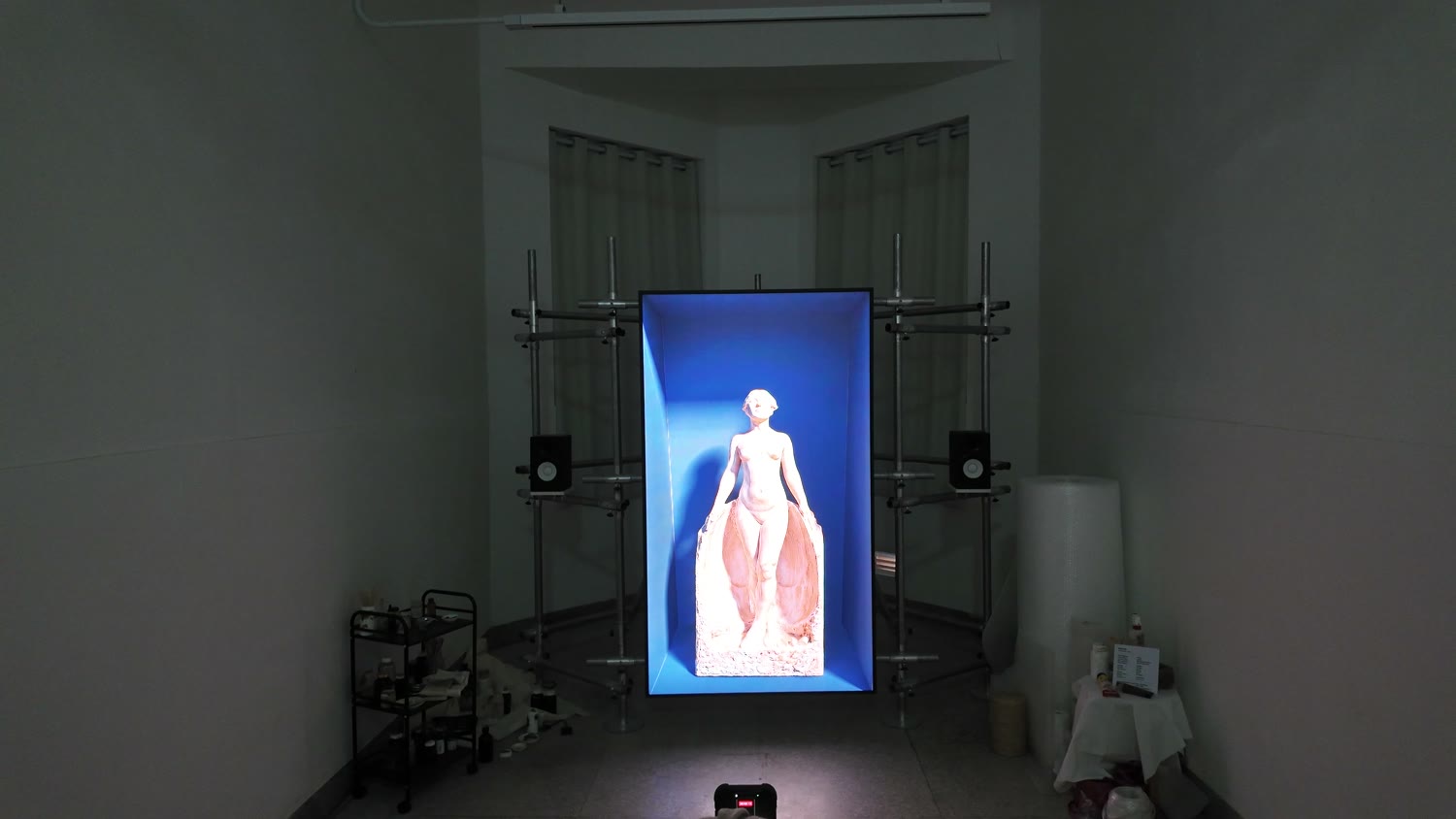
What stands in the room is an image of the marble, not the marble, on a flat 85-inch portrait screen. So the depth had to come from drawing. I blocked the case out in Blender and matched its perspective to one intended viewing angle, so that from there the walls of the niche appear to run back behind the glass.
There is no 3D hardware involved, and no glasses. It is a perspective illusion, and it is built for that one place to stand.
A day, in about thirty seconds
The image never holds still. It carries a full day's light changes, compressed until they are short enough to loop.
This part is generative, and I would rather say so. Claude helped me choose models and set up the ComfyUI workflow. I then iterated prompts and generated footage until the light fell across the marble the way I intended, and upscaled the result in Topaz.
The loop is only half of the effect. The developers play it back together with the physical lighting, so the image and the room change as one. Watched on site, the shadow behind her and the wall behind the screen rise and fall together.
Floor: the raids, under your feet
The floor of the room is a printed street map of Taipei. The projection adds only what the print cannot: target rings and dates, arriving one by one as the raids of 1945 play out on the wall ahead, and gathering over the city centre for 31 May, the largest raid of the war on the city.
Visitors stand on the map while it happens, so a ring can open at someone's feet.
Wall: odd days, even days
From late October 1958, the shelling of Kinmen fell into a pattern known as 單打雙不打: fire on odd-numbered days, none on even. The wall is built from that calendar. A date turns over in one fragment at the top, and the rest of the broken surface fills around it.
Odd days run in alert mode, with front-line soldiers and military footage. Even days turn to everyday life on Kinmen and Matsu, with leaflets falling through the frame. Neither image is ever whole: it only exists where a shard is there to catch it.
Map: one site, three times
The exhibition's own ground has a history, and a model of it sits on a table. A visitor chooses a period on a touch screen, and the table goes dark and rebuilds.
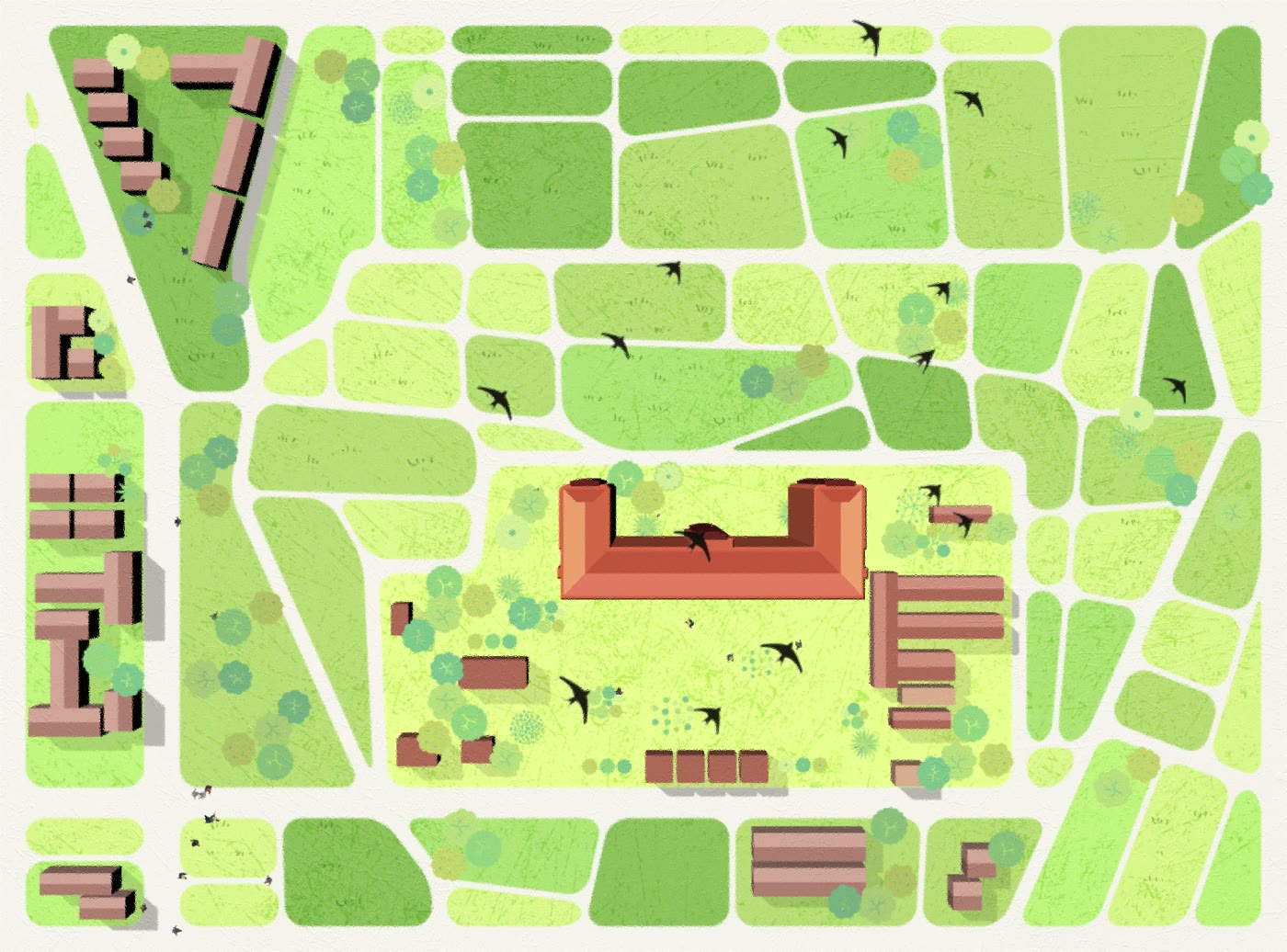
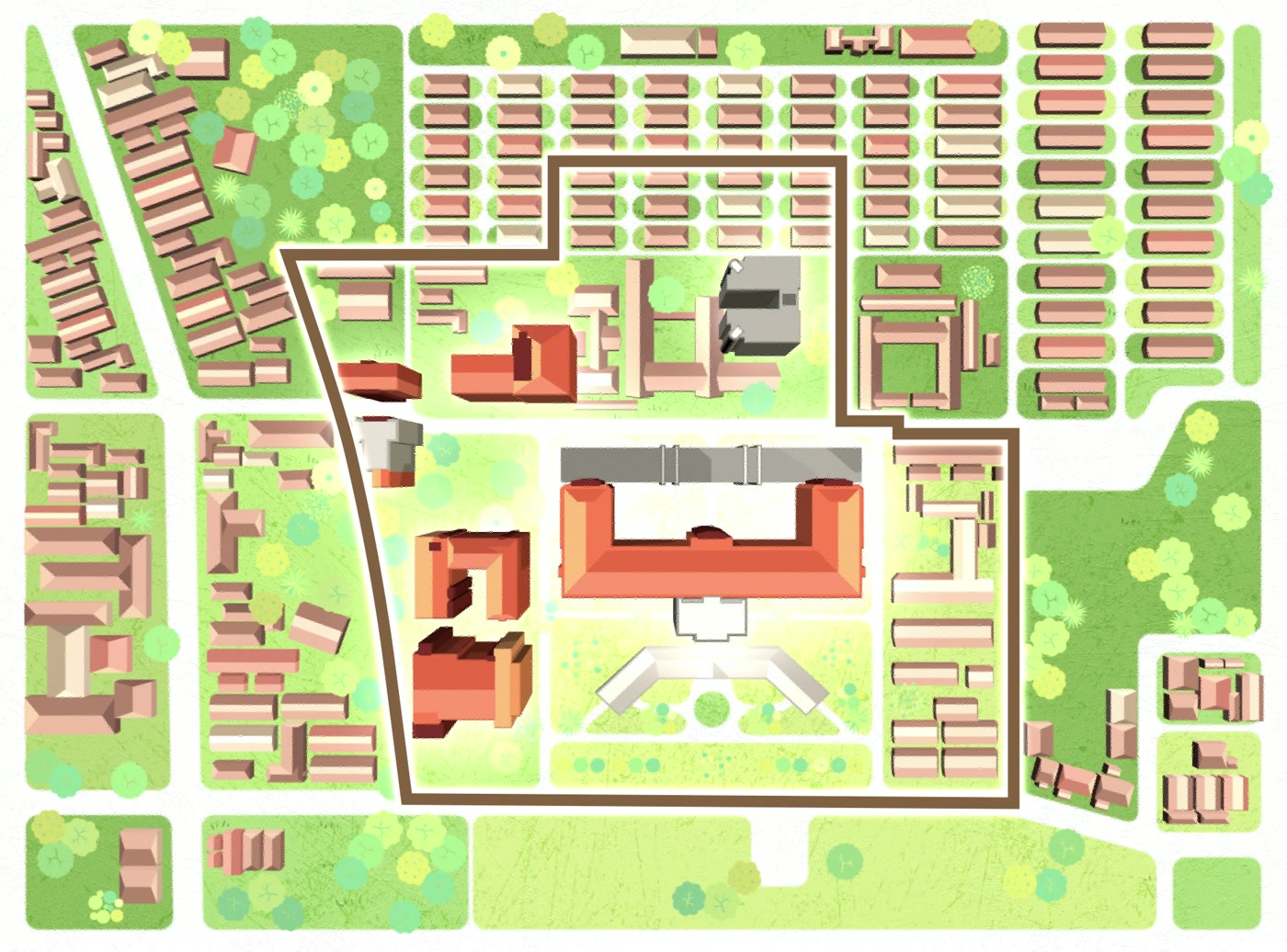
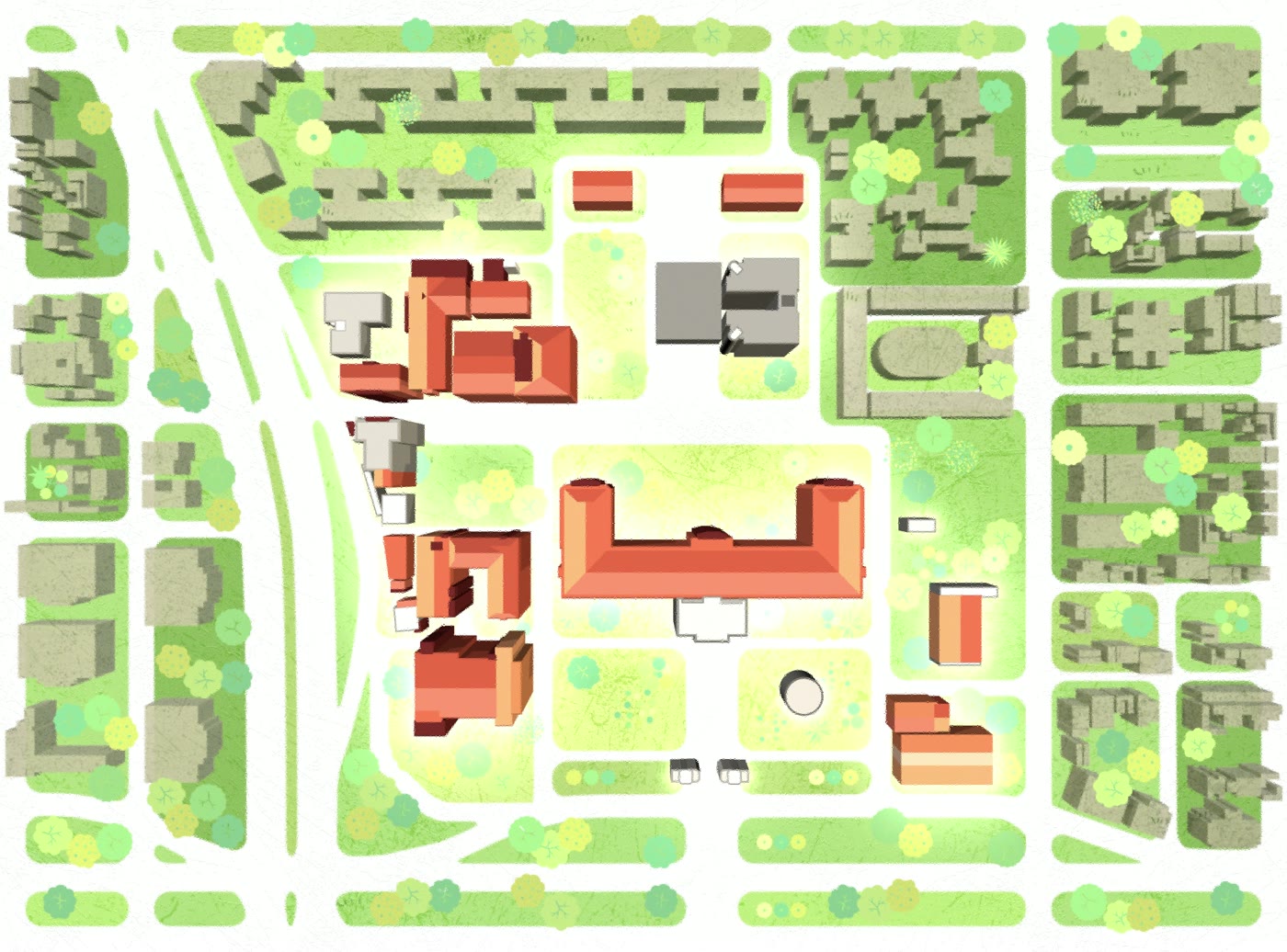
The Taiwan Governor-General's Industrial Research Institute, one building among farmland. The Air Force Command, walled off from the city as its buildings light up one at a time. And today, when the walls come down.