Prelude
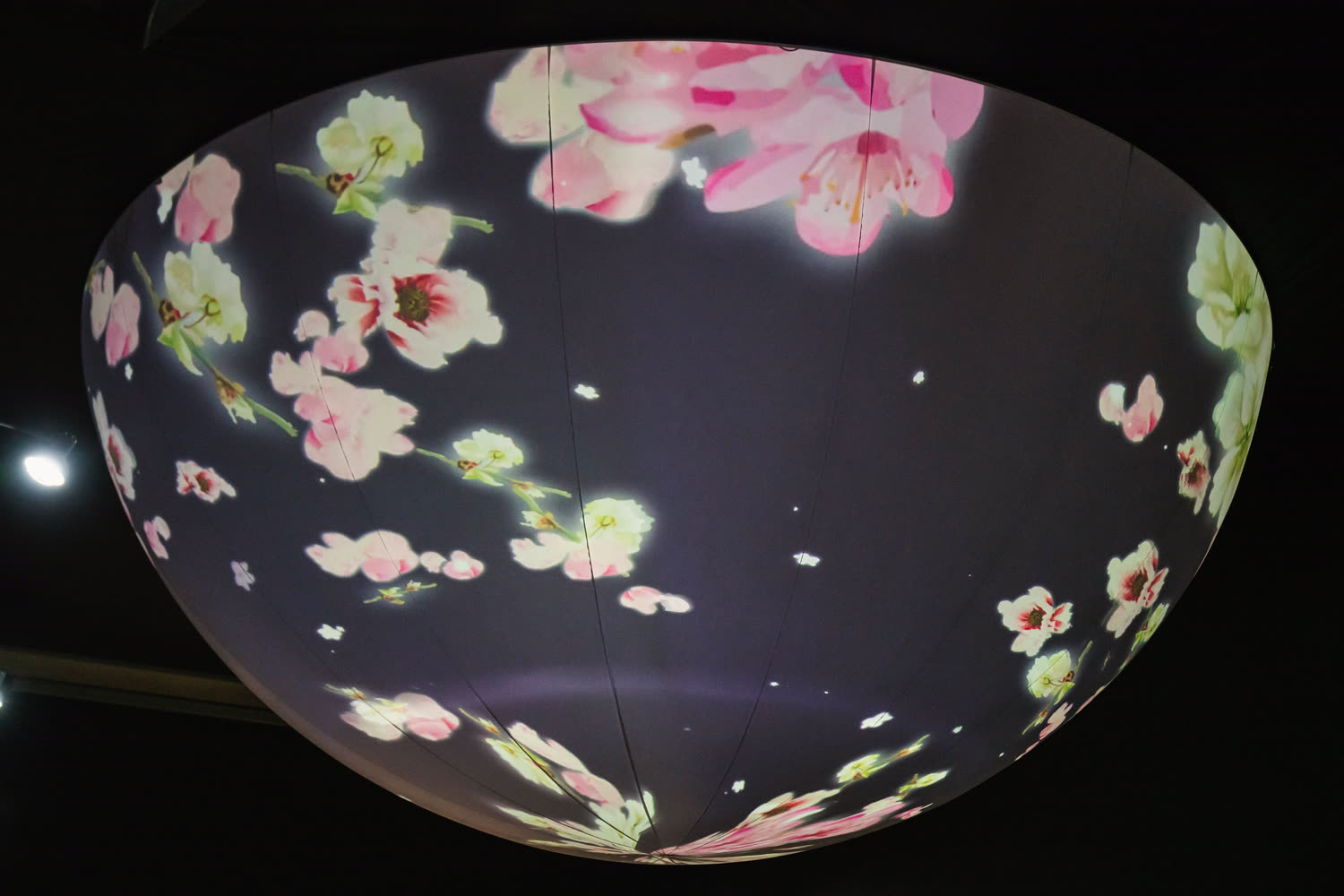
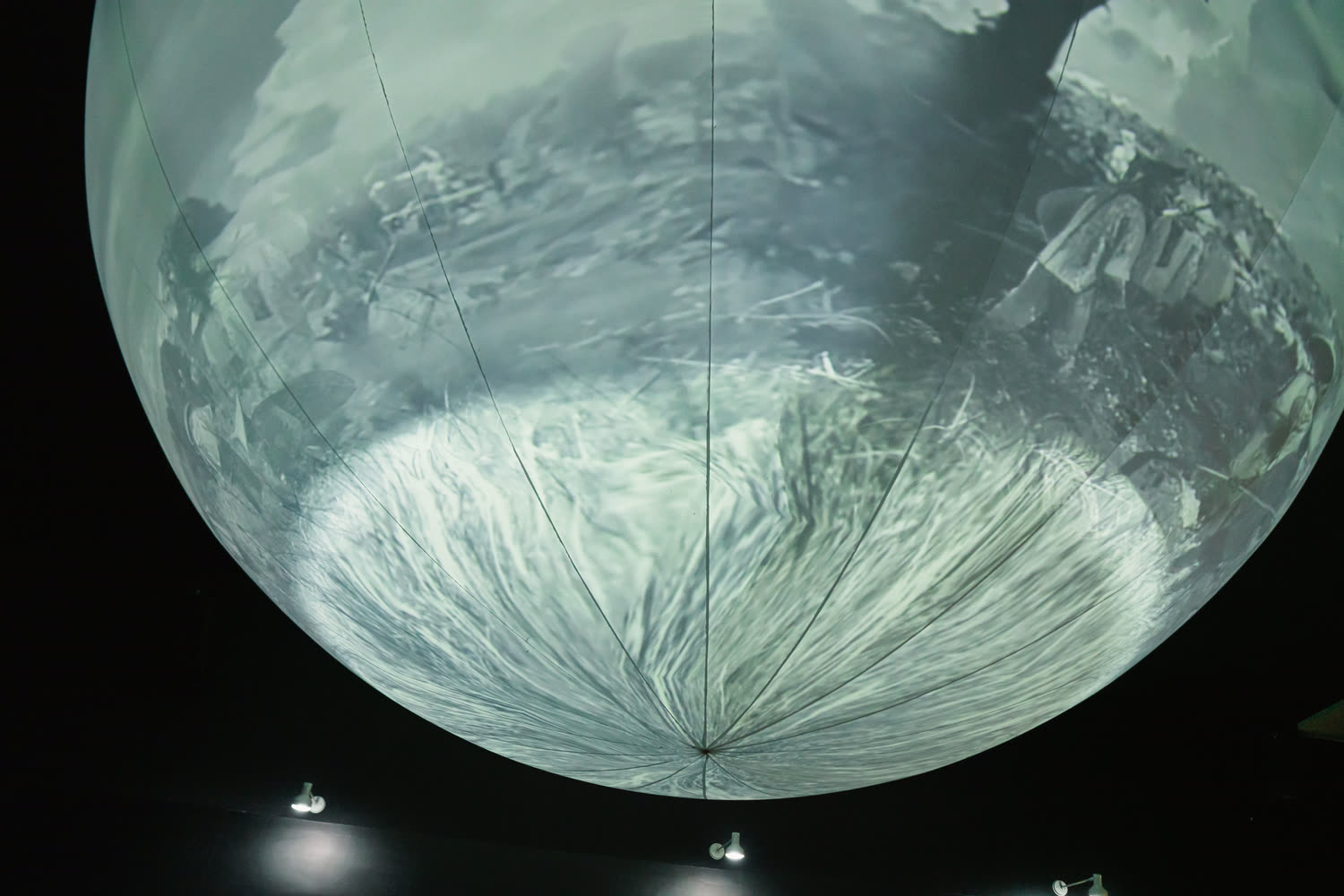
A sphere hanging in a dark room is the first thing a visitor meets in the World Pavilion. Before any object, any caption or any map, the Hakka story is told once, all the way round, on a surface with no edges to hide behind.
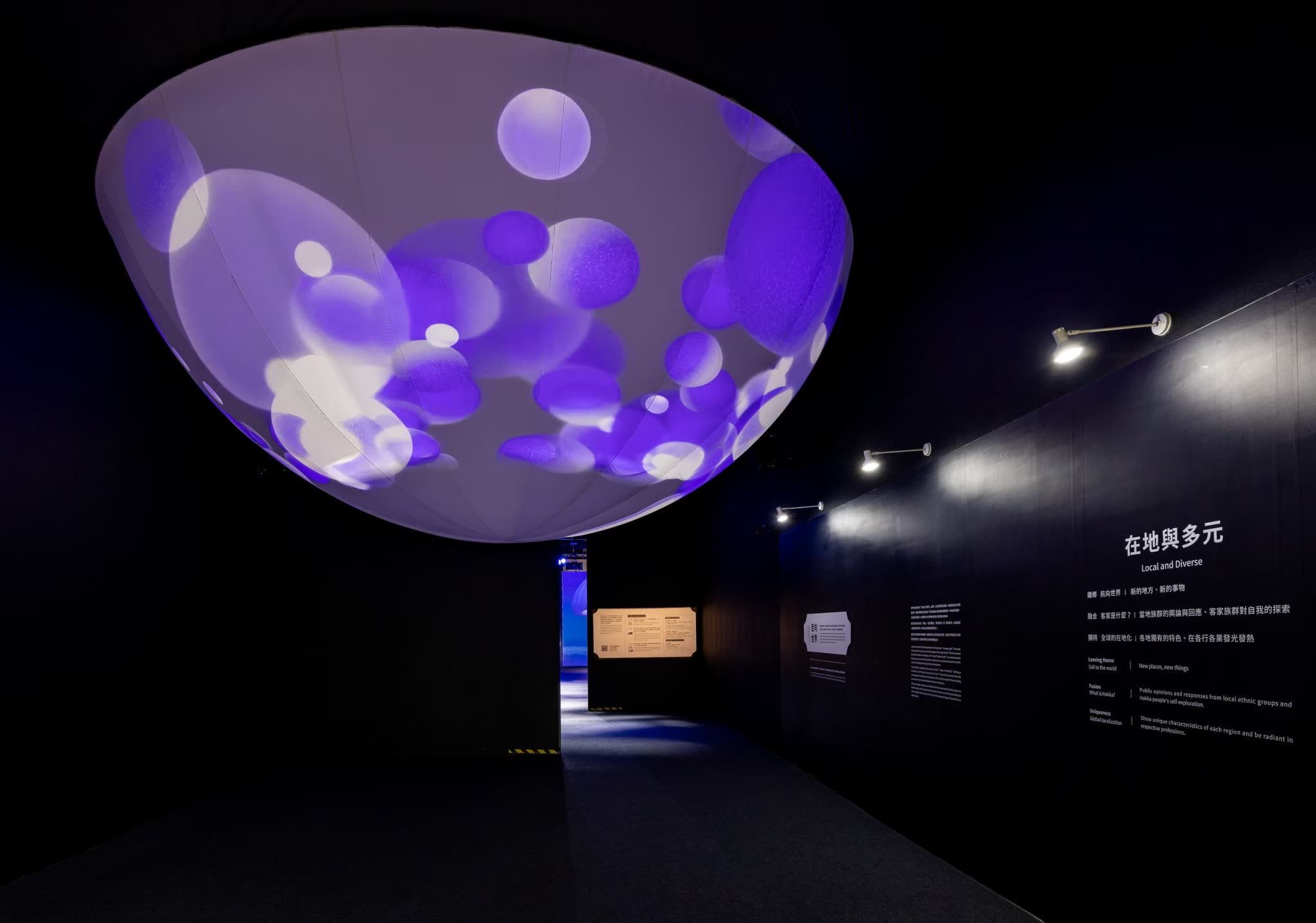
- The Prelude: the spherical projection that opens the World Pavilion
- Opening film for the Expo's identity launch event, 2022
- The rest of the World Pavilion
- Curation and exhibition content
- Architectural space
- The Expo identity and main visual
- Spatial design and build
- Projection hardware and calibration
- Chief curator Wang Teng-Chong, co-curator Lin Hui-Chen
- Architectural space, Chu Chih-Kang
- Main visual, Asao Tokolo
- Hakka Affairs Council and Taoyuan City Government, hosts
- MUSE Design Awards, Gold — Interior Design, Exhibitions, Pavilions and Displays, September 2023
- Awarded to the World Pavilion as a whole.
Sixty seconds, before anything is explained
The World Pavilion tells the story of Hakka people who left, and where they ended up. The Prelude is what a visitor sees before any of that is written down: a two-and-a-half-minute sequence on a single sphere, in the dark, on a loop. It was scoped at sixty seconds and grew.
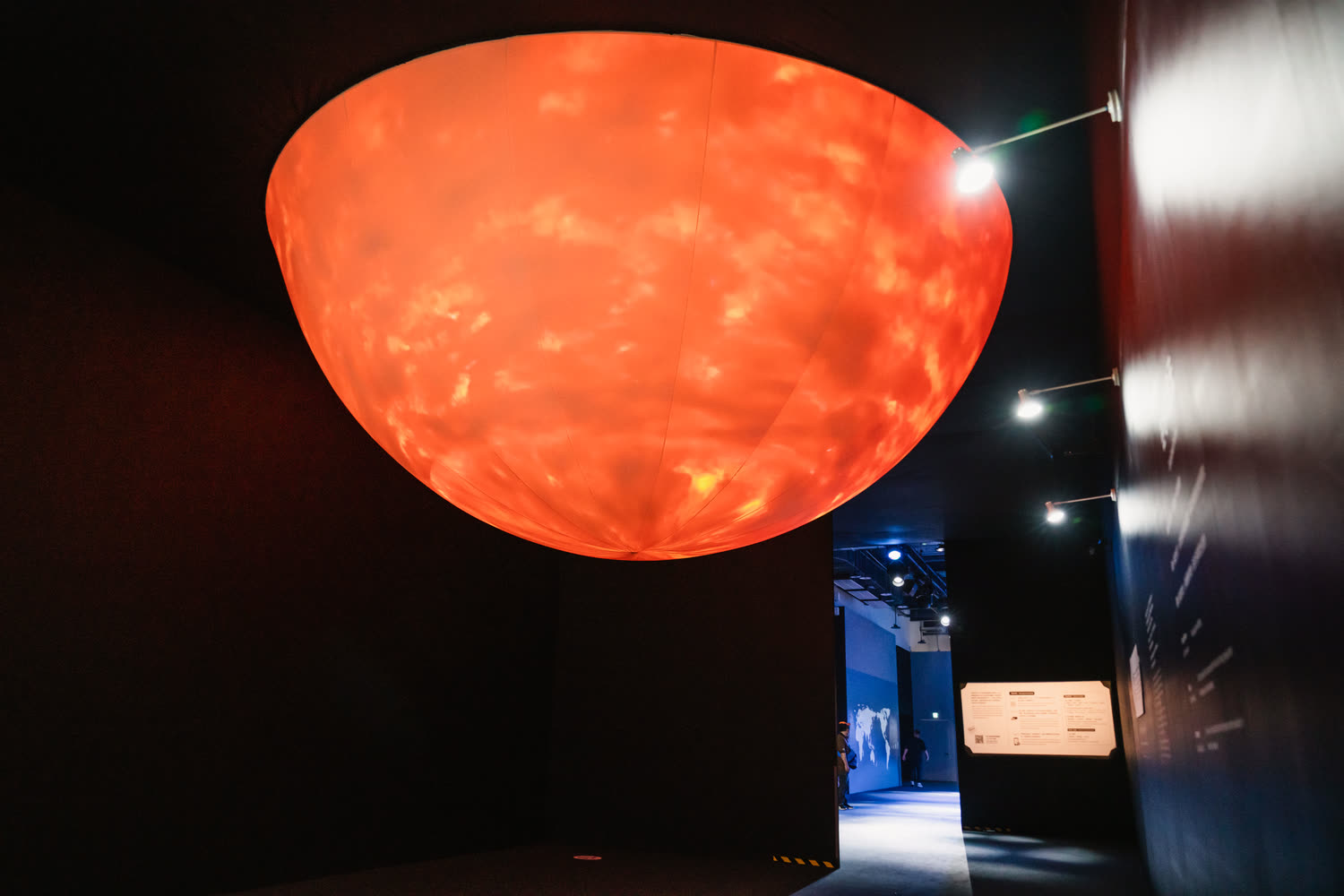
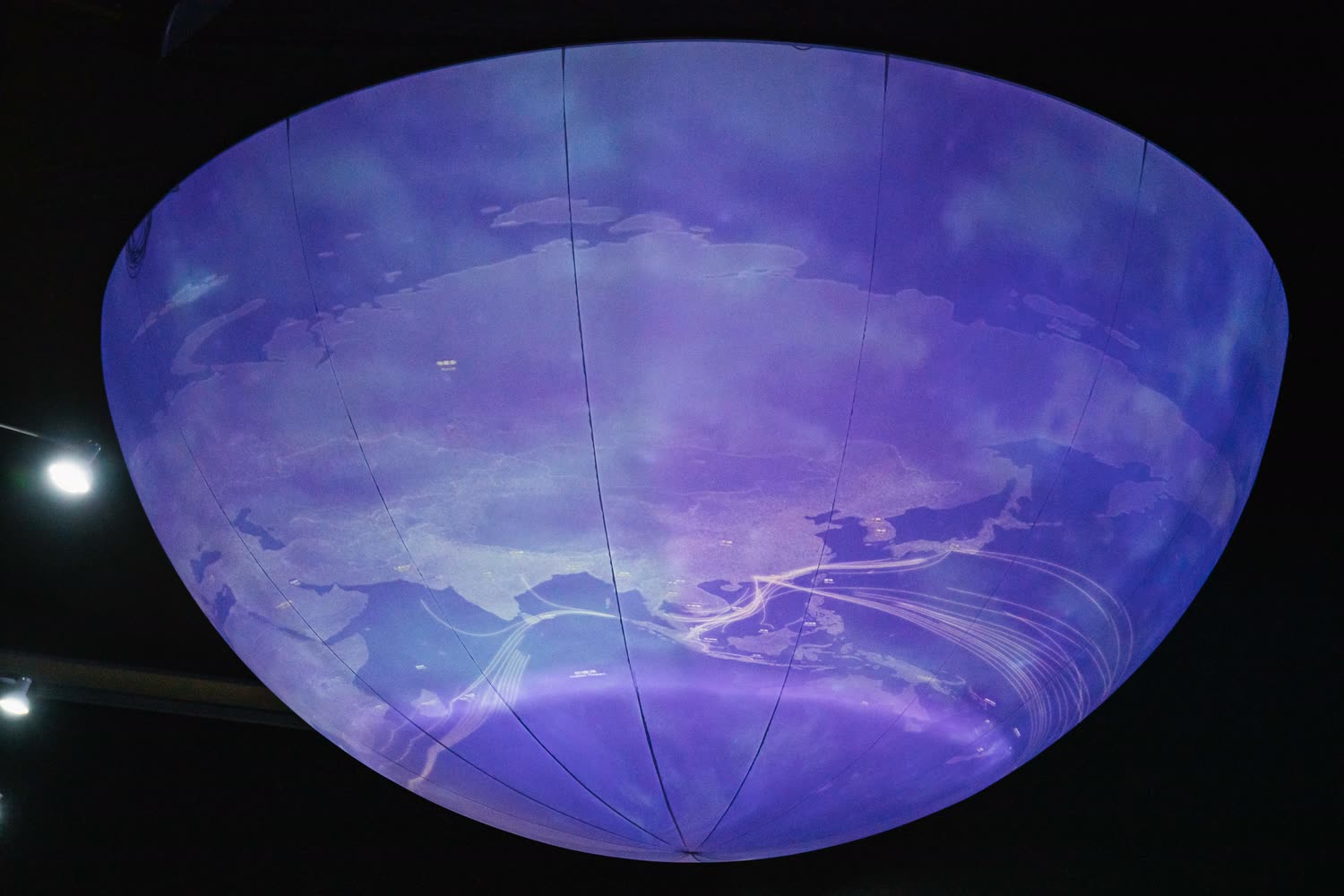
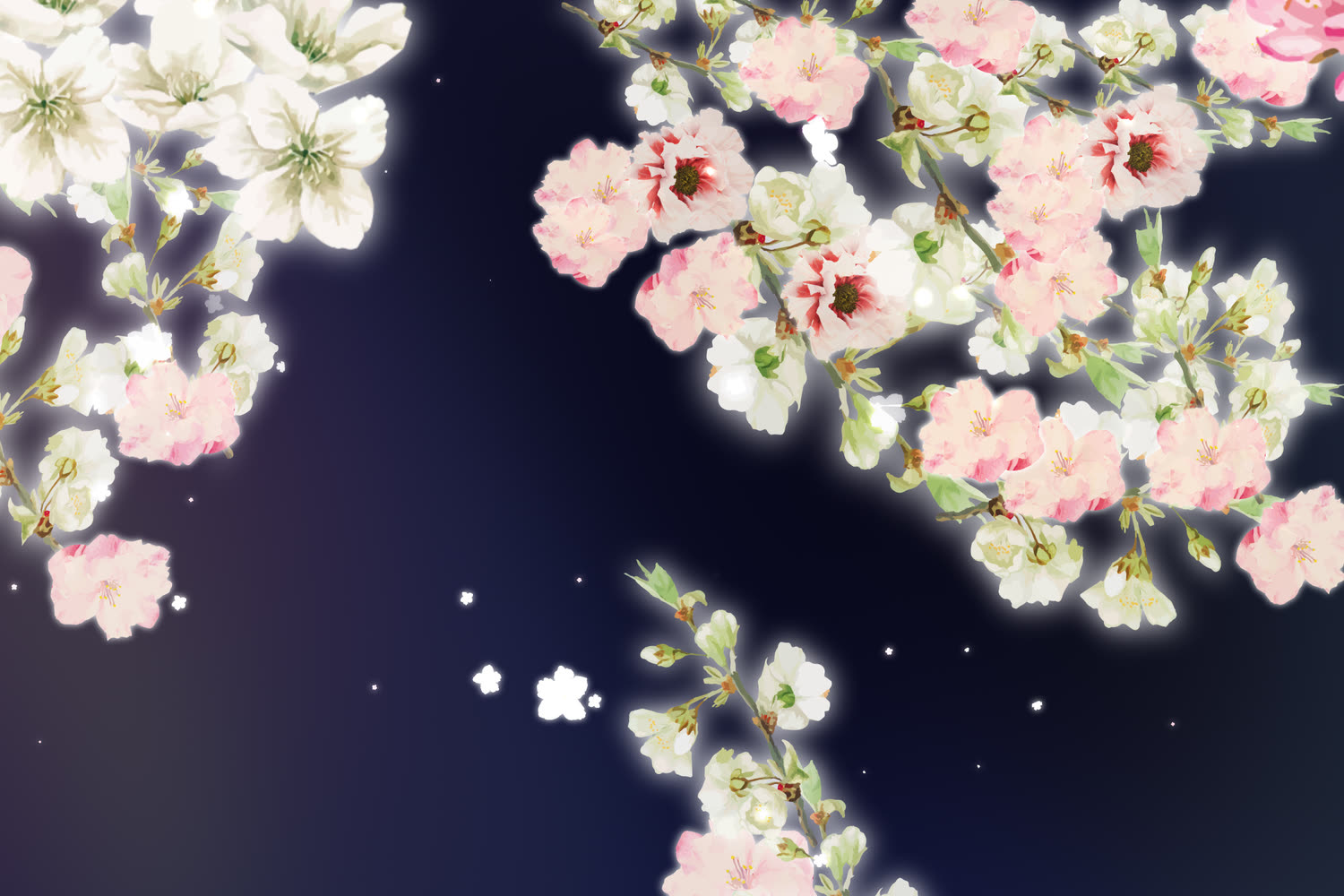
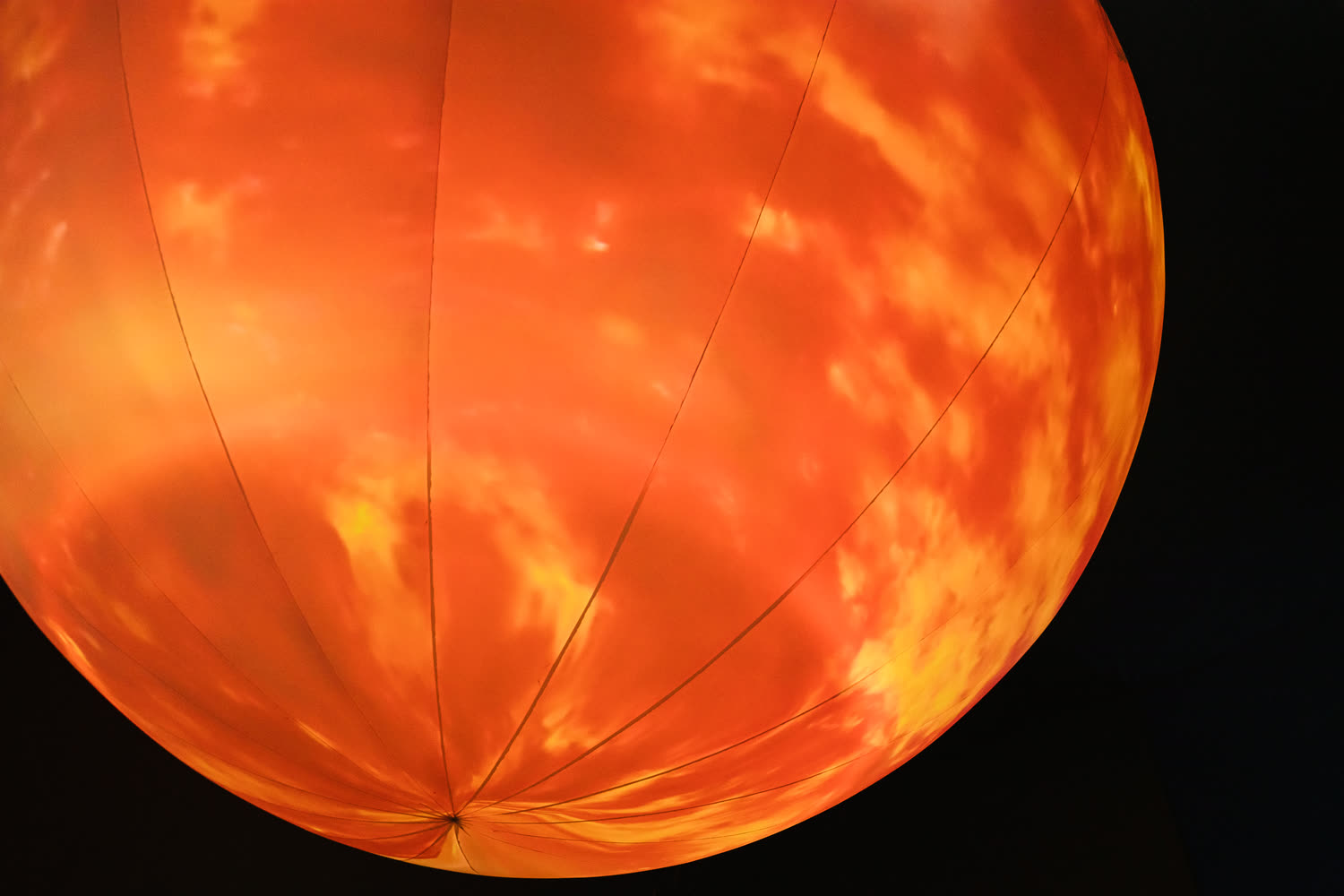
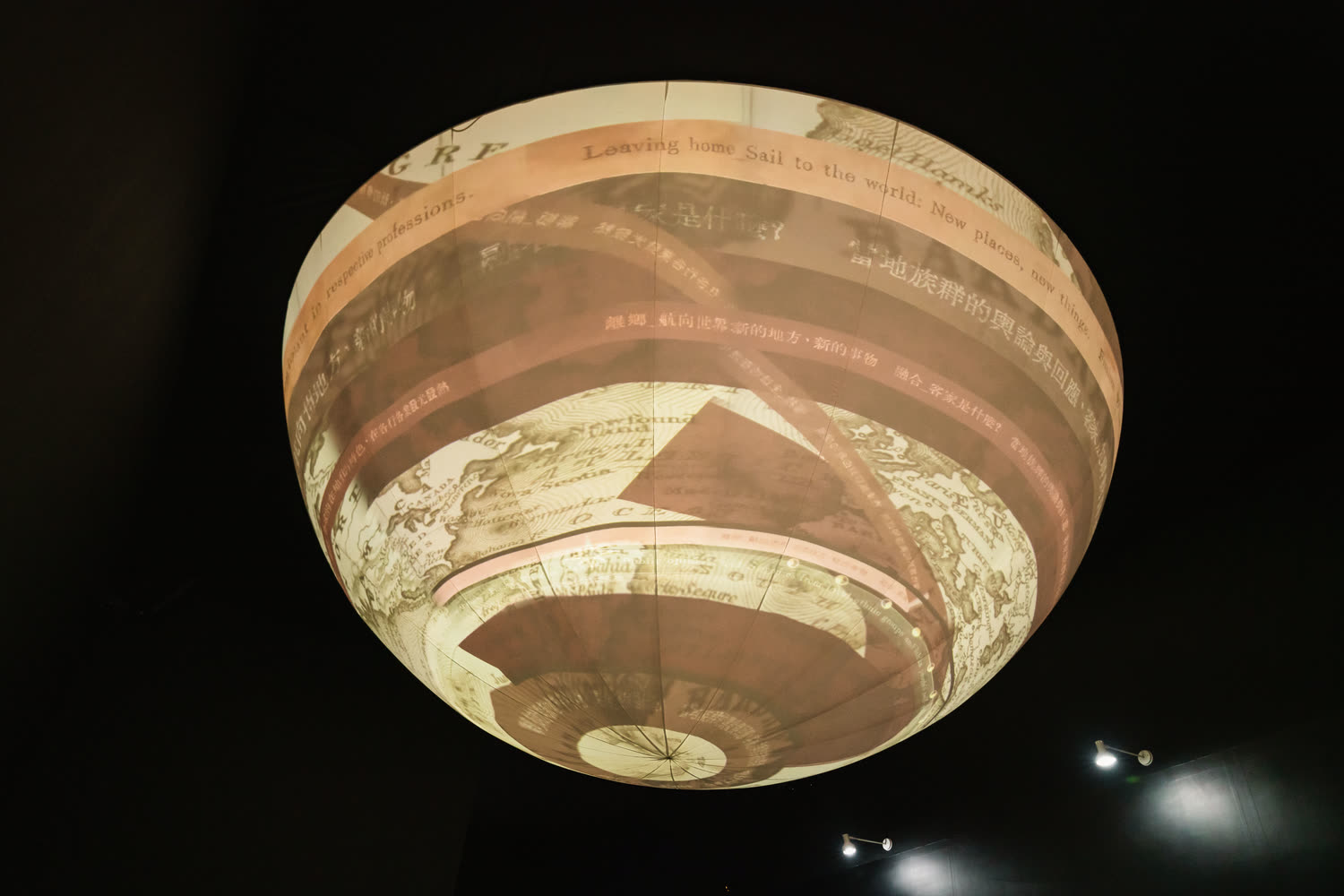
It is built on the three words the curators gave the pavilion — leaving home, fusion, uniqueness — and it moves through them in four cuts. A point of light opens in black and spreads until it is a sun. The sun becomes the earth, settling over Asia, and lines run out from there to the rest of the world. Historical photographs are pulled apart into layers and drift. Hakka pattern is stacked over itself until it turns into something that is not quite either.
Nobody is told any of that. It is a minute of light before the reading starts.
A sphere is not a screen
There is no frame to compose inside, no safe area, and no fixed place for the audience to stand. Every straight line in the source arrives on the surface as a curve, and a composition that reads from the doorway is sliding off the horizon by the time the same visitor is standing underneath it.
So nothing is authored on a sphere. It is authored flat, as two long strips that the projectors bend on: an upper band of 5880 × 1482 and a lower one of 5880 × 891, with 75 pixels of overlap where the two are blended into each other. Everything has to be composed pre-distorted, in a shape nobody will ever see.

The same frame, drawn and then delivered. What looks evenly spread on the flat strip crowds toward the crown of the sphere and thins out at the horizon, which is the whole reason it cannot be composed by eye.
One pass, all the way round
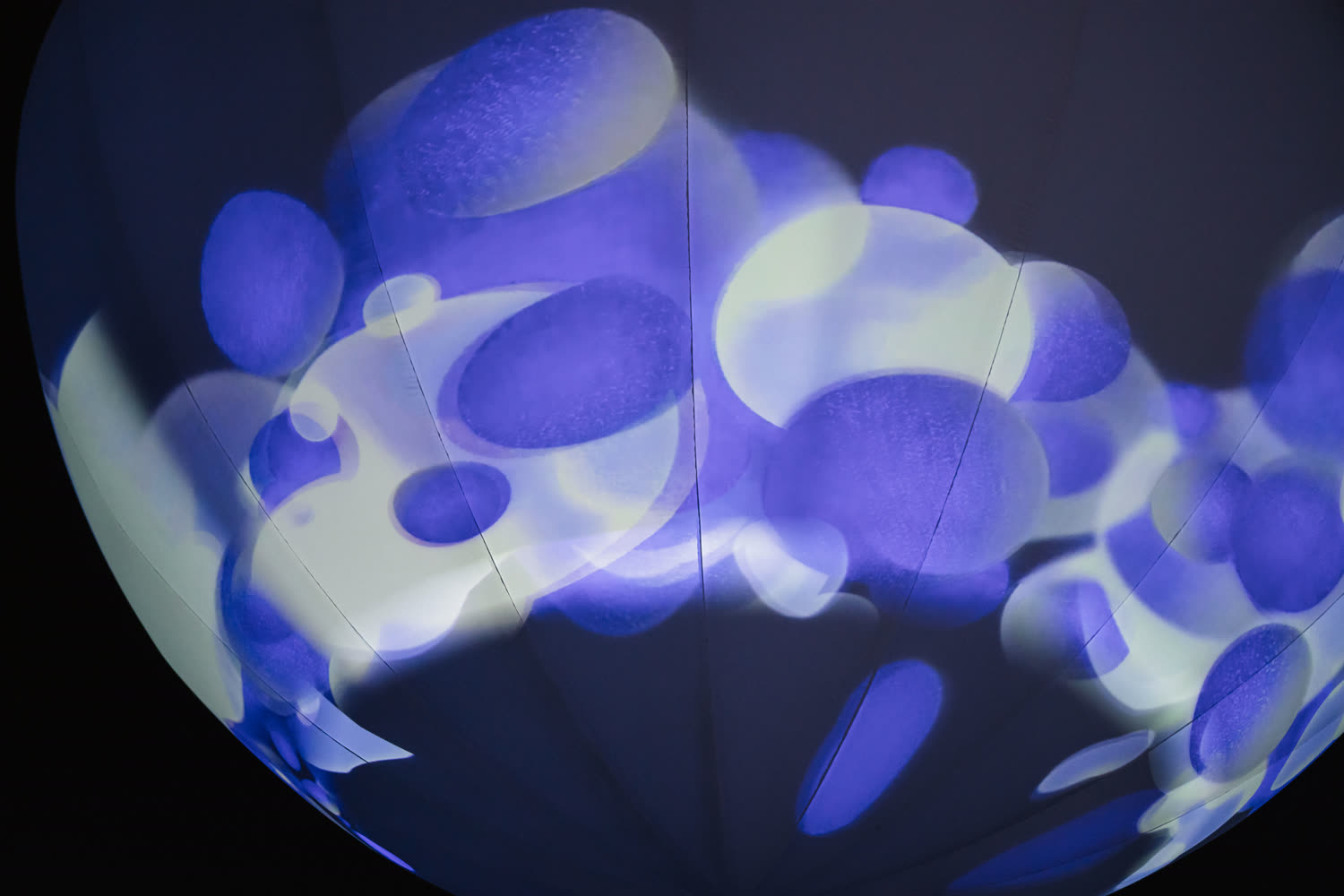
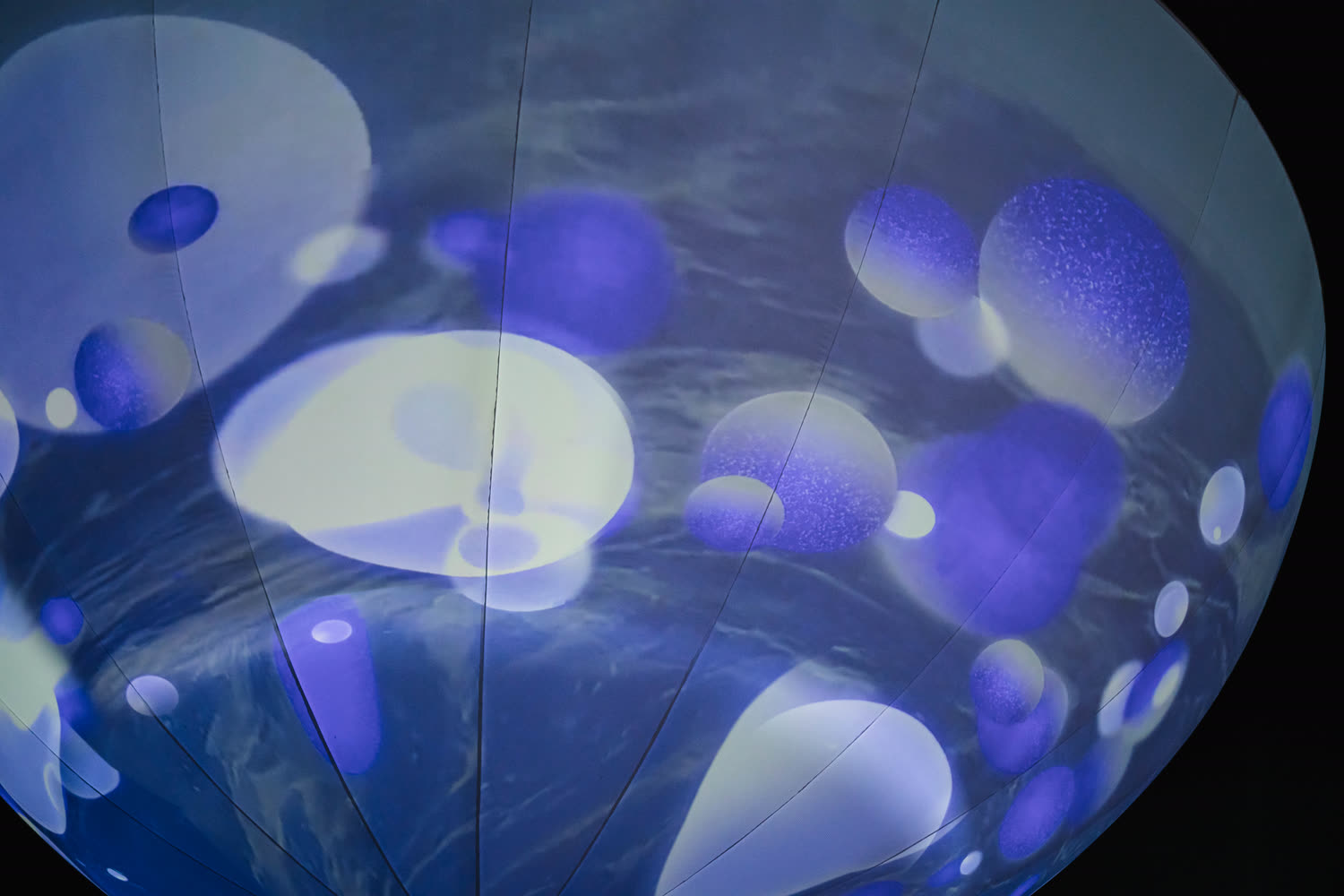
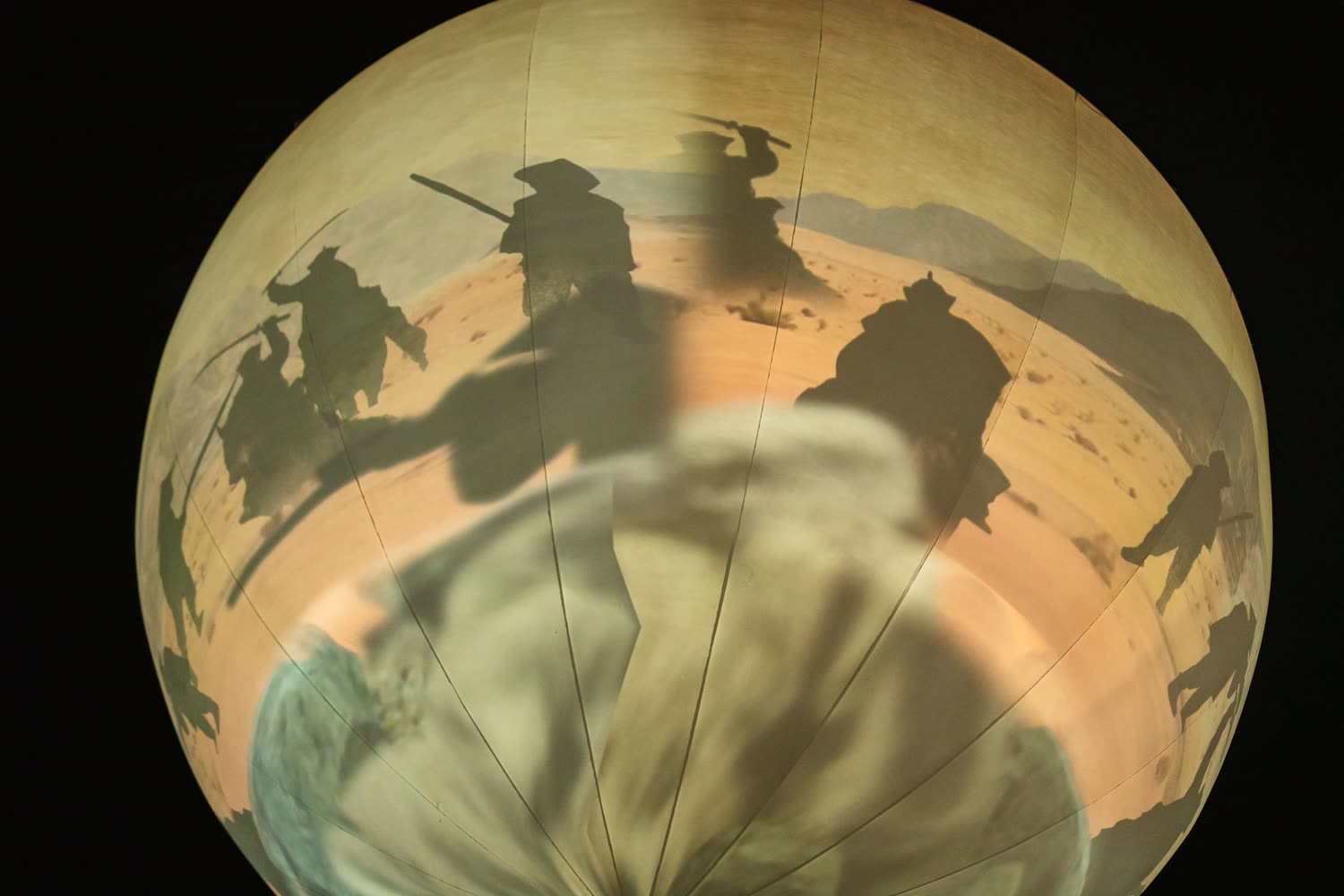
Cut one is the sun. From there the sphere carries drifting seed and a grey ridge, then turns into the archive: sepia photographs pulled apart into layers, documents and handwriting, figures silhouetted as if walking over the curve of the world.
What the Prelude opens into
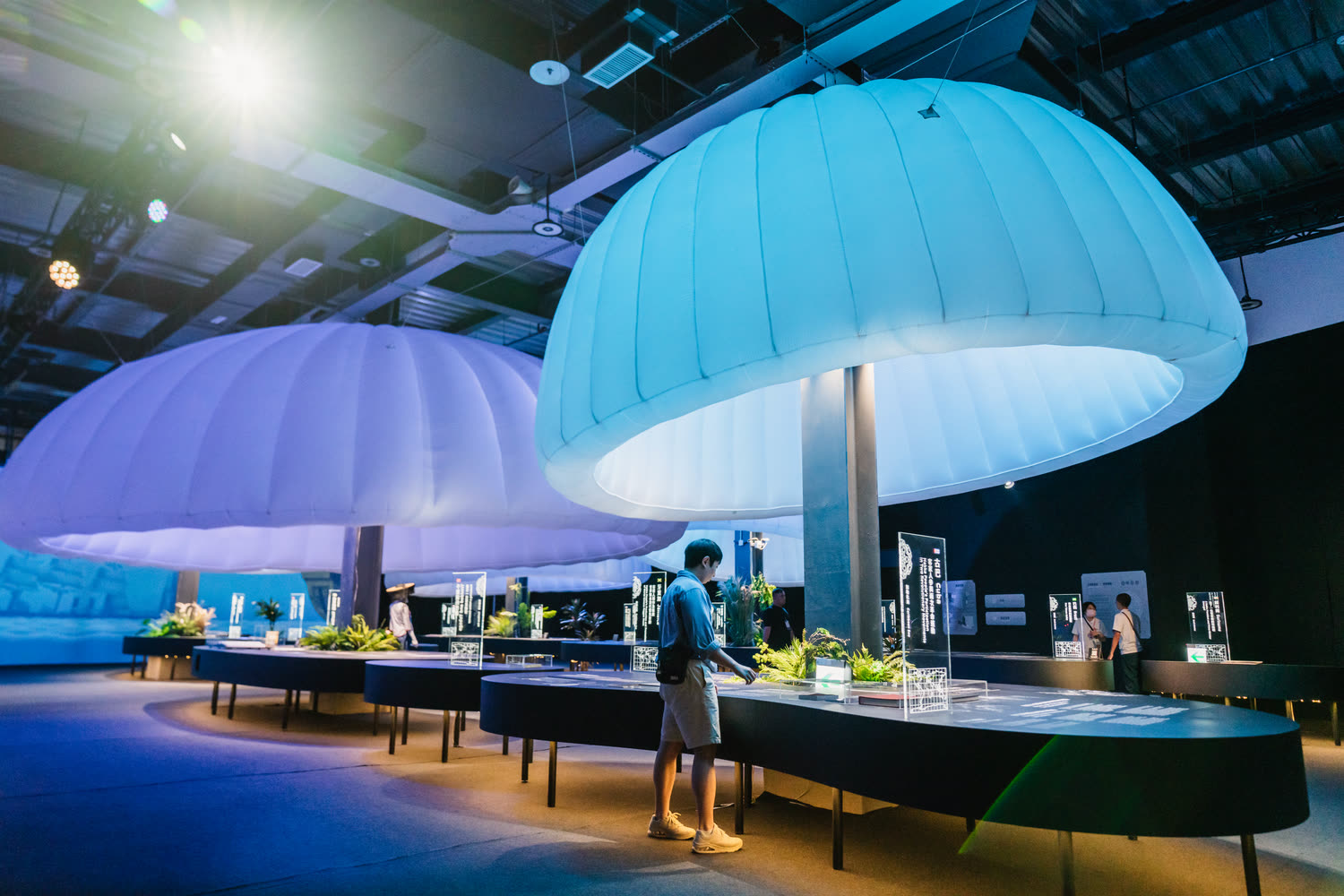
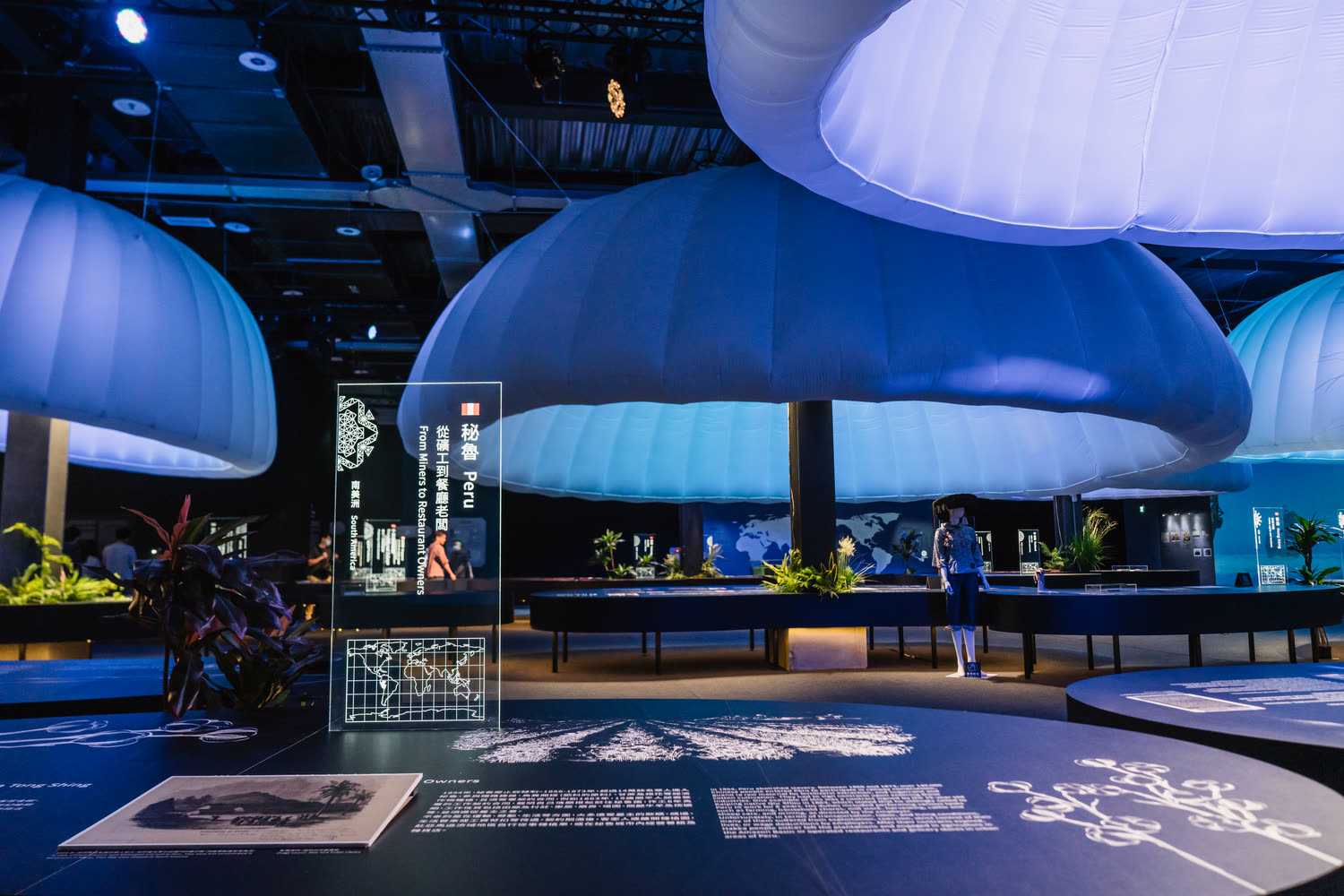
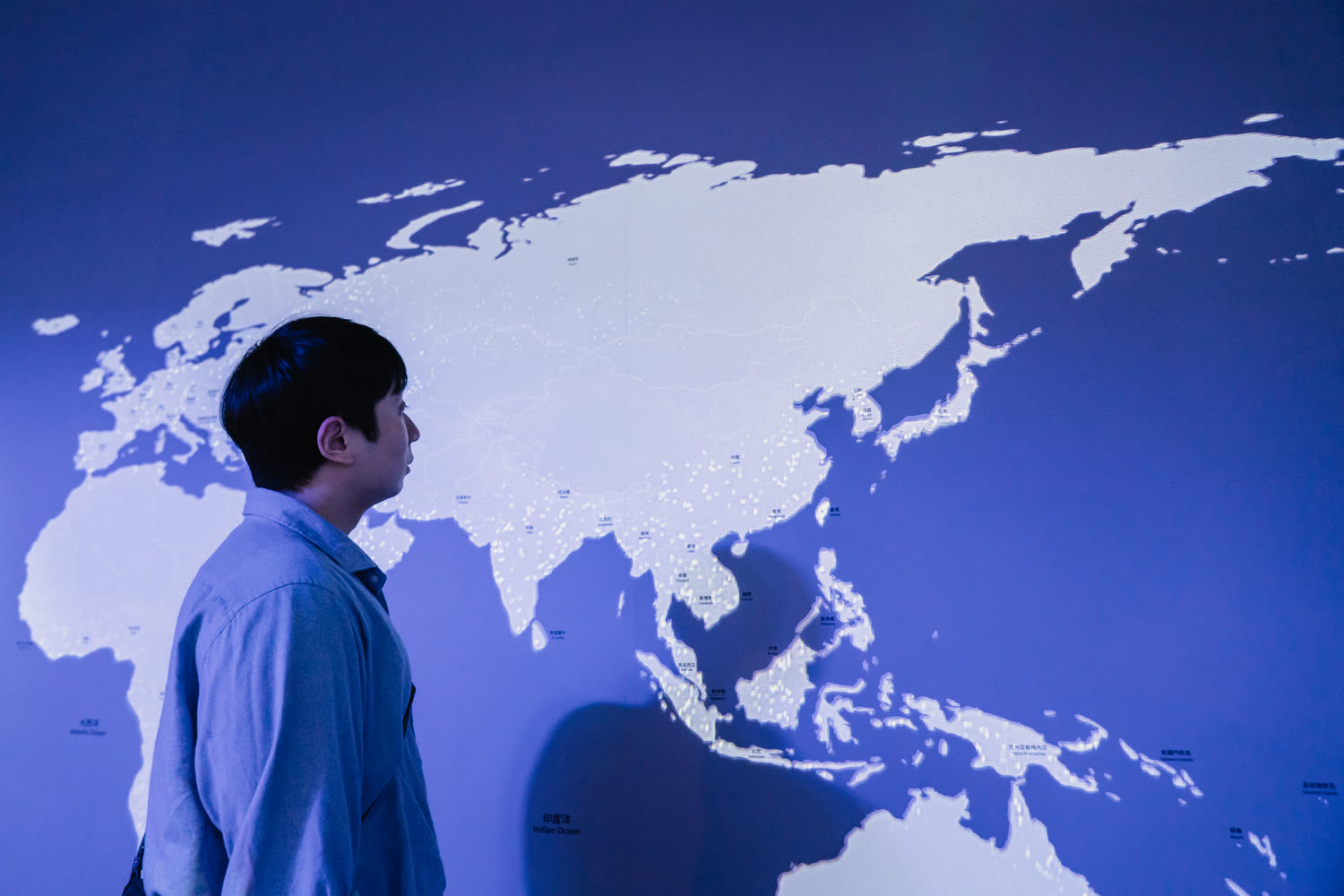
Past the sphere, the pavilion is a field of lit fabric canopies over low tables, and a wall where the Hakka diaspora is drawn as routes across a world map. The Prelude has to set up that room in under a minute, without saying any of it in words.
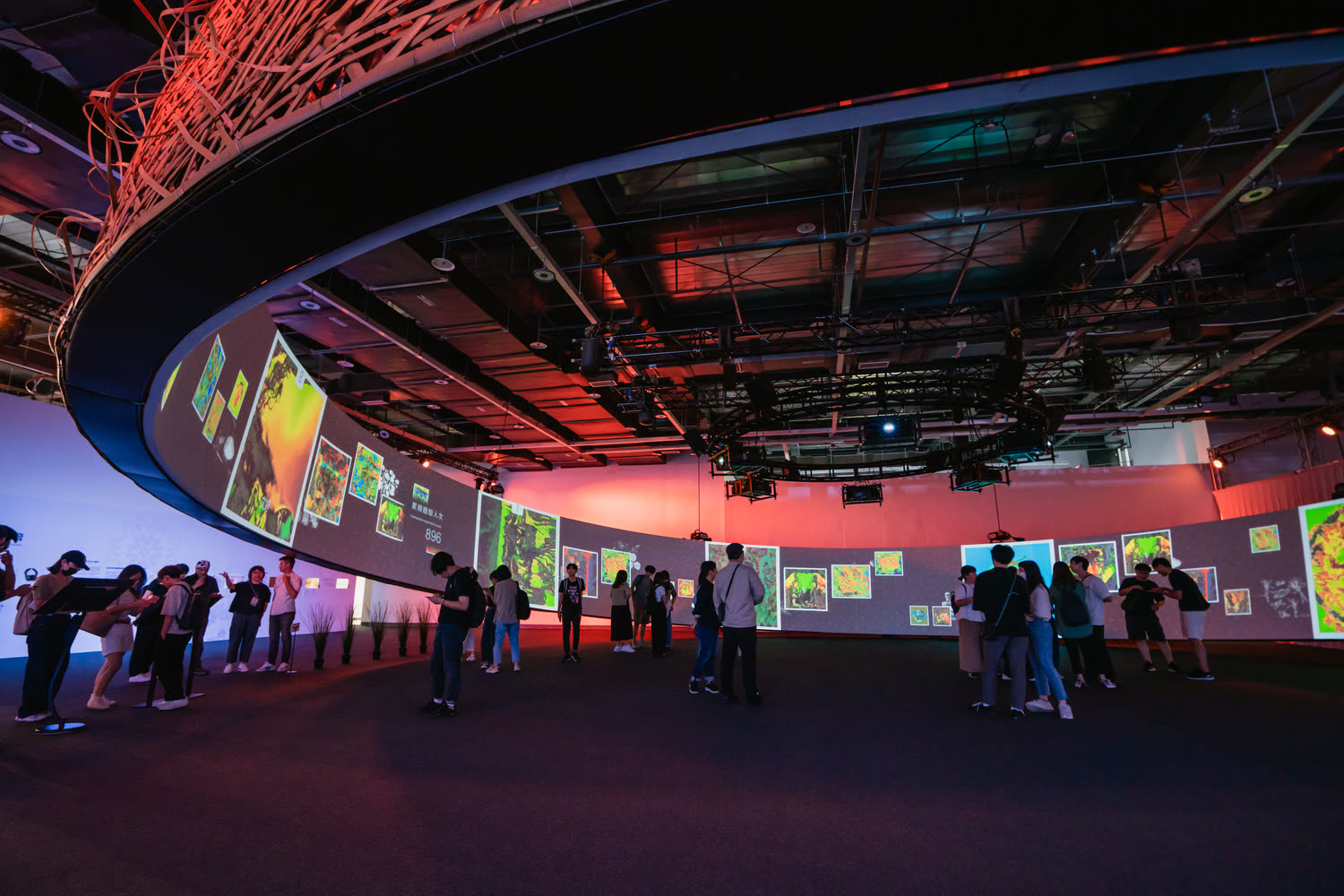
The zones below are the rest of the World Pavilion, by the other teams on it. They are here for context, not as my work.